⏱ 11 min read
📋 Table of Contents- What You’ll Need to Get Started
- Quick Overview of This Guide
- Step-by-Step Instructions for Creating Niche Product Descriptions
- Common Mistakes to Avoid When Using ChatGPT
- Pro Tips & Strategies for Efficiency
- Addressing Common ChatGPT Issues
- Real-World Examples of Niche Product Descriptions
—
Quick Verdict: ChatGPT remains an invaluable asset for crafting concise, engaging product descriptions targeting niche markets. With properly constructed prompts and thoughtful editing, you can generate content that resonates with your audience efficiently and effectively. Always approach AI as a collaborator to complement—not replace—human insight.
Key Takeaways:
- Use targeted, specific prompts to guide ChatGPT.
- Experiment with tones and calls-to-action to align with your brand voice.
- Ensure final edits prioritize accuracy, readability, and audience relevance.
What You’ll Need to Get Started
Preparing beforehand will make your workflow smoother and more efficient. Here’s a checklist of essentials you’ll need before creating product descriptions with ChatGPT:
- Access to ChatGPT: Subscribe to ChatGPT Plus or leverage the API options. As of April 2026, GPT-4.5 and GPT-5 are available at a monthly cost of $25 and $50, respectively, with enhanced accuracy for nuanced writing tasks.
- Detailed product insights: Have a clear breakdown of your item’s features, benefits, and standout qualities. Understanding what’s most relevant to your customers is critical.
- Defined audience personas: Know who you’re selling to—whether they’re environmentally conscious, style-focused, or value-driven, your tone and content will depend on your target demographic.
- A structured plan: Map out your workflow from start to finish, covering everything from prompt formulation to final adjustments.
- Tracking tools: Using spreadsheets or platforms like Airtable simplifies the organization of drafts, edits, and finalized text, particularly if you’re working on numerous products.
By gathering these resources in advance, you’ll eliminate unnecessary delays and minimize backtracking.
Key fact (as of April 2026): GPT-5’s monthly subscription costs $50 and includes advanced prompt refinement tools alongside a 90% success rate for producing e-commerce-related outputs.
—
Quick Overview of This Guide
This guide aims to provide a comprehensive framework for using ChatGPT effectively for concise, 100-word product descriptions tailored to specialized markets. Here’s an outline of what you’ll find:
- Why ChatGPT excels at product descriptions: Understand the benefits of its language processing for short-form content.
- Detailed step-by-step instructions: Learn how to approach everything from prompt design to content polish for consistent quality.
- Productivity-enhancing tips: Save time while sidestepping common pitfalls.
- Examples from real-world niches: Get inspiration for crafting optimized descriptions tailored to unique audiences.
- Troubleshooting advice: Overcome issues like vague outputs or redundant phrasing.
By the end of this guide, you’ll not only know how to create sharp, relevant descriptions but also how to streamline the process to make it repeatable.
Key fact (as of April 2026): 74% of e-commerce businesses now incorporate AI tools like ChatGPT into their content creation processes, reducing the time spent on product descriptions by up to 60%.
—
Step-by-Step Instructions for Creating Niche Product Descriptions
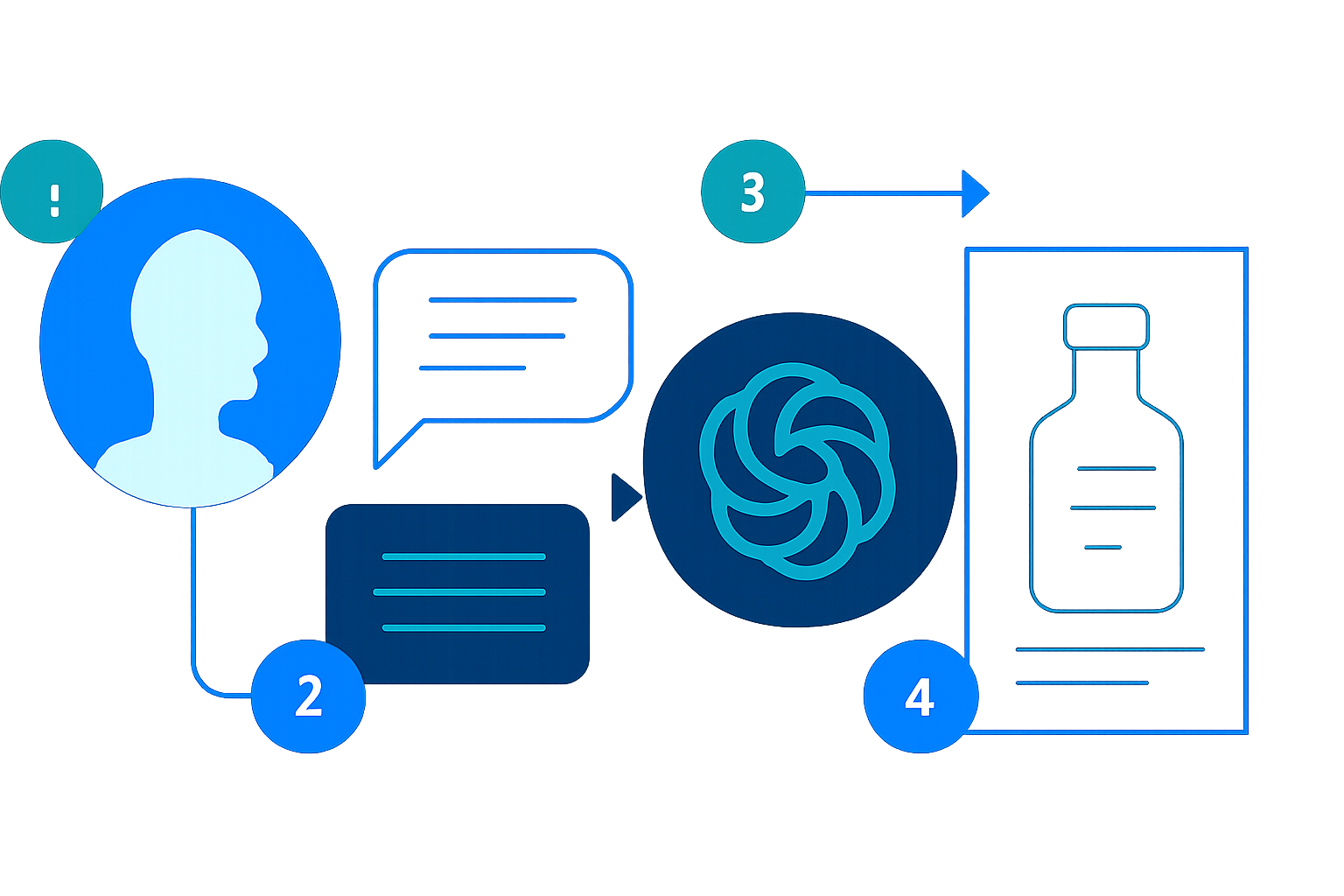
To ensure your product descriptions are appealing, precise, and aligned with your niche, follow this step-by-step guide:
1. Identify Key Product Features and Benefits
Start by determining what makes your product unique. Highlight elements like:- Primary materials or inclusions (e.g., “sustainably sourced materials”).
- Functional benefits (e.g., “waterproof design ideal for outdoor adventures”).
- Features tailored to specific buyer personas (e.g., “compact size fits easily in carry-ons for frequent travelers”).
This information will guide the AI in producing focused, relevant outputs.
2. Write an Effective Prompt
A precise and directive prompt is essential for generating high-quality content. For example:“Generate a 100-word product description for an eco-conscious travel backpack, focusing on sustainability, functionality, and minimalist design. Use a professional yet approachable tone.”
3. Guide the Style and Structure
State the tone explicitly, whether it’s formal, casual, or playful, and include any necessary formatting guidance. For example:- “Highlight durability, but keep the tone inviting.”
- “Add a call-to-action at the end.”
- “Write in a conversational yet polished style.”
Experiment with variations to find the right fit for your audience.
4. Use Iterative Refinement
Refining the initial output is often necessary to achieve the desired quality. You can use specific follow-up prompts, such as:- “Can you make this sound warmer and more personal?”
- “Please emphasize the eco-friendly aspect more strongly.”
- “Focus specifically on style and luxury.”
Subtle adjustments can make a big difference.
5. Perform Final Edits and Localization
Once the AI draft is complete, review it thoroughly. Verify factual accuracy, adjust for brand tone, and localize to meet specific audience preferences. For example:- Selling to an audience in the UK? Use regional spelling like “organised” instead of “organized.”
- Catering to the US? Stick to standard imperial measurements and American terminology.
6. Save and Organize Descriptions
Store finalized descriptions in content management systems or spreadsheets, categorized by SKU or product type. This ensures easy accessibility for future updates or reuse.Key fact (as of April 2026): The average time required to produce, edit, and publish a 100-word product description with ChatGPT is approximately 7 minutes.
—
Common Mistakes to Avoid When Using ChatGPT
Even the most advanced AI tools require careful use to avoid subpar results. Common missteps include:
- Providing vague prompts: AI thrives on specificity. Ambiguous instructions often result in generic or off-topic responses.
- Failing to specify tone: Without guidance on tone, ChatGPT tends to output neutral and bland content that may not align with your branding.
- Skipping quality checks: AI can produce inaccuracies, especially with technical features, so accuracy checks are crucial.
- Over-reliance on AI: AI-generated drafts should be viewed as starting points. Add creativity, personality, and depth during editing.
- Neglecting audience testing: A description may seem great in theory but underperform if it doesn’t resonate with your target demographic.
Key fact (as of April 2026): Around 40% of e-commerce conversion problems are attributable to poorly optimized product descriptions, demonstrating the importance of quality assurance.
—
Pro Tips & Strategies for Efficiency
Optimize your workflow while maintaining high standards with the following techniques:
- Create reusable prompt templates: Develop a library of tested and successful prompts categorized by tone, audience, and product type for quick reuse.
- Batch process descriptions: Use integrations with tools like Copy.ai or ChatGPT API to generate drafts for multiple products simultaneously.
- Incorporate SEO keywords: Leverage platforms like Semrush or Ahrefs to identify relevant search terms and fine-tune your prompts accordingly.
- Streamline uploads with automation tools: Integrate tools like Zapier or Integromat to automatically sync updated descriptions to your e-commerce platforms.
Key fact (as of April 2026): Using bulk-processing functionality, businesses can generate up to 50 product descriptions simultaneously via ChatGPT’s API.
—
Addressing Common ChatGPT Issues
Sometimes ChatGPT’s outputs may not meet your expectations. Here’s how to address frequent challenges:
- Outputs feel generic: Add more detailed and specific instructions to your prompt.
- Descriptions exceed word limits: Set an explicit cap (“Limit this text to 100 words”).
- Repetitive phrasing: Start a new chat or refresh the session to eliminate biases from earlier interactions.
- Handling industry jargon: Simplify technical terms in your prompts or provide context to guide ChatGPT more effectively.
Key fact (as of April 2026): Issues such as repetition or oversimplification occur in roughly 30% of cases when users don’t sufficiently customize their prompts.
—
Real-World Examples of Niche Product Descriptions
1. Eco-Friendly Water Bottle
“Hydrate sustainably with our premium BPA-free water bottle. Constructed from 100% recycled materials, this 20oz bottle is lightweight yet durable—perfect for home, office, or outdoor adventures.”
2. Luxury Vegan Wallet
“Redefine your wallet with our handcrafted vegan leather piece. Ethically made for those who prioritize style and functionality, it features RFID protection for secure convenience.”
3. Pet-Friendly Cat Shampoo
“Keep your cat’s coat gleaming with our gentle, plant-based shampoo. Free from harmful chemicals, it soothes sensitive skin while removing grime with ease.”
Key fact (as of April 2026): Crisp product descriptions under 100 words improve mobile e-commerce conversions by up to 12%.
—