Quick Verdict: Training an AI tool to efficiently manage recurring business email templates in 2026 is a manageable and rewarding process. Tools like ChatGPT Business Edition and Jasper AI make it easier than ever to automate tasks such as marketing, customer support, and transactional emails. By gathering appropriate data, adhering to a structured process, and addressing potential mistakes, businesses can significantly streamline their communication efforts while maintaining professionalism and quality.
Key Takeaways
- AI tools simplify repetitive email tasks like invoices, follow-ups, and newsletters.
- Using accurate historical data improves training results.
- Regular updates to training inputs ensure email relevance over time.
⏱ 11 min read
📋 Table of Contents – Items You’ll Need: – Step 1: Gather High-Quality Email Data – Step 2: Choose a Suitable AI Platform – Step 3: Enter Training Prompts – Step 4: Analyze Output Quality – Step 5: Refine Outputs with Editing Features – Step 6: Evaluate Effects Post-Deployment- Avoid These Common AI Training Mistakes
- Tips and Shortcuts for Optimizing AI Training
- Troubleshooting Common AI Issues
- Effective AI Email Usage: Real-Life Applications
—
—
Requirements for Training an AI for Email Templates
Before beginning the training process, it’s crucial to gather all necessary tools, data, and permissions to ensure smooth implementation. Proper preparation minimizes errors and unnecessary delays during setup.
Items You’ll Need:
- A comprehensive list of recurring email types: Determine the types of messages—such as follow-ups, onboarding messages, payment notifications, and newsletters—that you often send. This will make it easier to organize your training data into distinct categories.
- An advanced AI tool supporting email customization: As of April 2026, top choices include ChatGPT Business Edition and Jasper AI. While Jasper is noted for its marketing adaptability, ChatGPT provides exceptional flexibility with tone and conversational flow.
- Reliable email samples: Build a dataset of past emails that exhibit well-crafted language and tone. These samples act as training material for your AI and greatly influence the model’s output quality.
- Defined tone and style guidelines: Clarify your brand’s communication style—whether formal, casual, or neutral. Sharing these guidelines with your team ensures consistency across all outputs.
- Customer data permissions: If using customer-specific information, confirm compliance with relevant privacy laws such as GDPR or CPRA. Mishandling this data can lead to legal ramifications.
Setting up your system with these steps will make the training process smoother and allow for a more efficient workflow later.
Key fact (as of April 2026): ChatGPT Business Edition offers extensive fine-tuning capabilities and API integrations at a starting price of $40/month per user.
—
Training Overview: AI and Email Templates
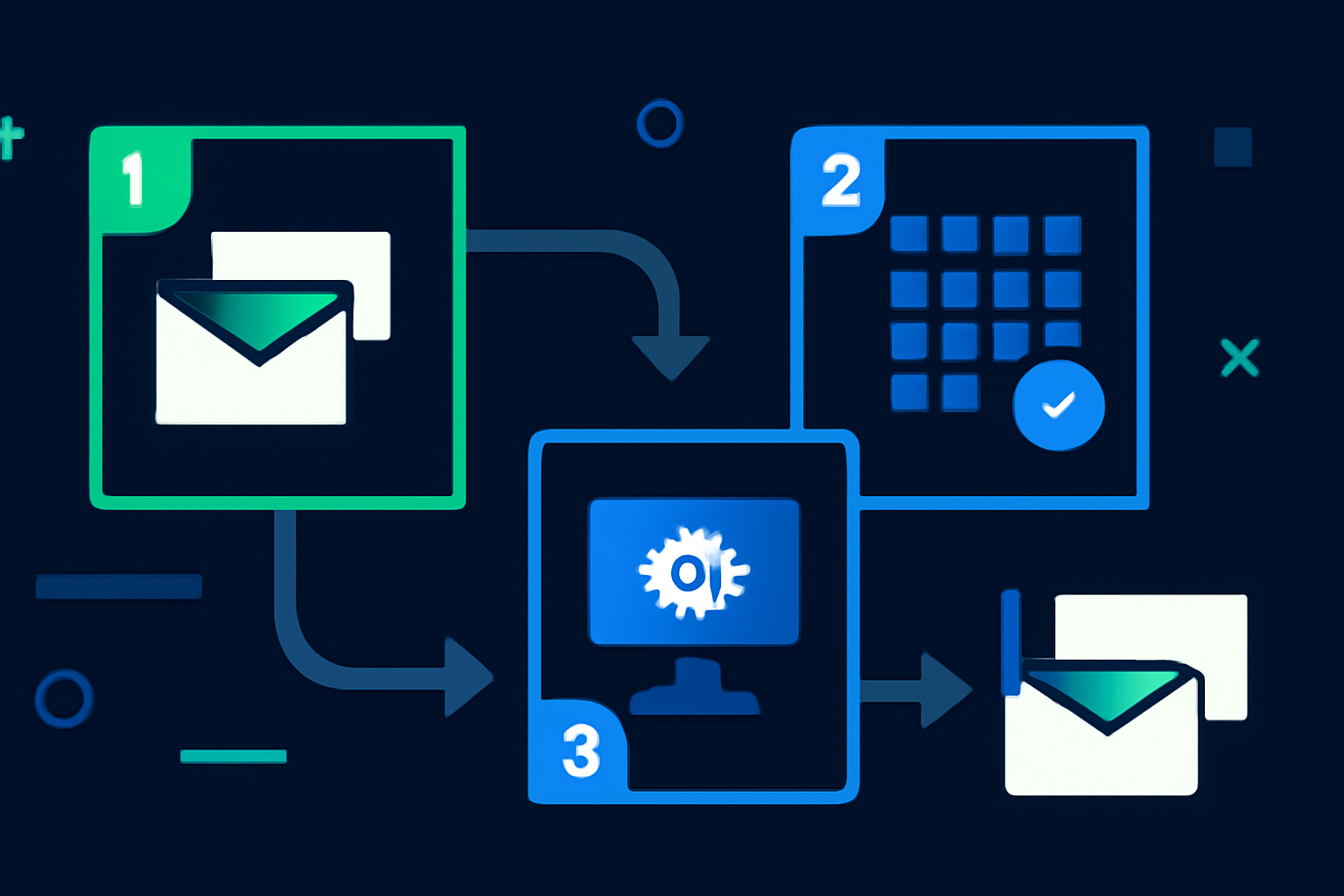
The process of training an AI for business emails can be broken down into simple steps:
1. Establish the purpose: Decide whether your objective is to streamline client interactions, enhance transactional emails, or accelerate internal communications. 2. Collect historical email data: A targeted training dataset should include at least 50–100 emails per template type for best results.
3. Input training data with prompts: Use the fine-tuning options within leading AI tools like ChatGPT Business Edition and Jasper AI. Create specific, clear prompts for each category, such as: “Generate a polite payment reminder.”
4. Evaluate and refine output: Carefully review AI-generated email drafts for tone, structure, and branding accuracy. Making iterative improvements is key to success.
5. Continually optimize: Run repeated tests and updates to ensure the AI meets your expectations. Consistent refinement leads to more accurate results.
For small businesses, following this workflow enables AI-trained email templates to be ready for deployment within a single day.
Key fact (as of April 2026): A minimum of 500 words of sample data per template is recommended for effective email training.
—
Step-by-Step Guide to Training Your AI Tool
Here’s how to ensure your AI tool becomes a consistent, reliable resource for crafting business emails:
Step 1: Gather High-Quality Email Data
To start, assemble a robust dataset of your historical emails. Organize them into key email categories:- Welcome/onboarding messages for new customers.
- Sales meeting follow-ups with prospects.
- Payment reminder emails.
- Monthly newsletters.
The ideal data should be aligned with your company’s tone and objectives.
Step 2: Choose a Suitable AI Platform
Select an AI tool that aligns with your needs. Two strong contenders are:- ChatGPT Business Edition: A versatile option for customer communications requiring natural conversational tones. Its API access also allows integration into CRM tools.
- Jasper AI: Favored by marketing teams, Jasper excels in crafting campaign-specific emails with a variety of optional pre-set templates.
Step 3: Enter Training Prompts
Upload your email samples into your AI platform. Define specific goals for each email type. Examples include:- “Create a friendly overdue invoice reminder.”
- “Generate a concise yet warm follow-up email post-sales demo.”
Step 4: Analyze Output Quality
Once the model drafts emails, compare them against your existing templates. Does the AI grasp your tone and format preferences? Fine-tune inconsistencies or shortcomings during this phase.Step 5: Refine Outputs with Editing Features
Many AI tools provide in-app editing interfaces where adjustments can be made directly to the generated content. Fix formatting issues or overly formal language as needed and re-run prompts until results meet your expectations.Step 6: Evaluate Effects Post-Deployment
Track key metrics like open rates, response rates, and engagement to assess how well your automated emails are performing. These metrics can guide further training updates.Key fact (as of April 2026): Jasper AI comes with a “Tone Fine-Tuner” feature, offering businesses simple tone adjustments via a slider interface.
—
Avoid These Common AI Training Mistakes
Avoidable errors can disrupt the email training process. Stay vigilant for these missteps:
- Inconsistent sample data: Mixing different writing styles can confuse the AI model. Use uniform formatting and tone in all your samples.
- Skipping the testing phase: Never deploy drafts without first confirming the AI’s accuracy and alignment.
- Overdependence on AI: Human oversight is still essential. Review every email to filter out inaccuracies or branding mismatches.
- Outdated training datasets: Regularly update your database to reflect the latest branding and communication standards.
- Ignoring feedback mechanisms: Collect reactions from staff and customers to identify areas for improvement and retrain the AI as needed.
Key fact (as of April 2026): Properly tested AI can reduce email drafting times by up to 40%.
—
Tips and Shortcuts for Optimizing AI Training
To enhance the efficiency and effectiveness of your AI email training, consider these tips: 1. Pre-approve templates: Start with a standardized set of email templates that perfectly reflect your desired content structure. 2. Leverage batch processing: Use tools like Jasper to upload multiple email examples in one go to save time. 3. Define personas: Prepare guidelines detailing communication styles, such as formal corporate or warm customer engagement. 4. Utilize built-in automation features: Newer AI systems often suggest helpful prompts or workflows based on previous interactions. 5. Monitor KPIs: Review metrics periodically—open rates, click rates, etc.—to identify retraining opportunities.
Key fact (as of April 2026): Updating your email prompts every six months keeps your automation strategies fresh and relevant.
—
Troubleshooting Common AI Issues
Facing challenges with AI email training? Here are solutions to frequent problems:
Problem: Emails lack a natural tone.
- Fix: Adjust prompts to use conversational or relatable language. Include phrases like, “Hi [Name], I wanted to quickly follow up…”
Problem: Incorrect formatting on email drafts.
- Fix: Supply detailed and visually formatted examples to set a better standard for your outputs consistently.
Problem: Transactional emails appear vague or imprecise.
- Fix: Add explicit examples of transactional language, including clear placeholders like [Invoice Total] or [Due Date].
Key fact (as of April 2026): Businesses focusing on prompt specificity reduce “robotic” email outputs by up to 60%.
—
Effective AI Email Usage: Real-Life Applications
Here are examples of businesses using AI to automate email processes successfully:
1. Welcome Messages: AI solutions help new users feel valued by detailing next steps upon subscription or sign-up. 2. Sales Follow-Ups: Automated responses encourage engagement with non-responsive sales prospects. 3. Invoice Notifiers: Promptly notify customers about pending payments, enhancing repayment speed. 4. Support Ticket Replies: Craft acknowledgment emails letting users know their issues are being addressed. 5. Newsletters: Personalized AI-generated newsletters can significantly enhance reader engagement and interactions.
Key fact (as of April 2026): AI-personalized newsletters have been shown to increase open rates by 42%.
—
FAQ: AI Training for Optimized Email Templates
Q: How much training data is required for optimal AI performance? You need at least 50–100 sample emails for each template type. For more nuanced styles like humor or empathy, provide larger datasets.
Q: What’s the best AI tool for automating emails in 2026? ChatGPT Business Edition for versatility and tone adaptability; Jasper AI for marketing-focused outputs.
Q: Can non-technical users train these tools? Yes, platforms now feature intuitive, user-friendly interfaces that don’t require programming knowledge.
Q: How often should I update training inputs? Every 6 months is a practical timeline for aligning with new customer needs or changes in company branding.
Q: What are the main benefits of AI-driven email automation? It saves time, ensures standardized brand tone, increases engagement, and enables scalable, personalized communications.
Q: How can I guarantee the AI respects my brand tone? Share concrete tone guides, review outputs frequently, and utilize tone-adjustment features within your AI platform.
—
By following this tailored approach, you can ensure your AI tool becomes a reliable asset for email efficiency and consistency. Save time and let your automation system handle the repetitive tasks!